

North America
USA East Coast
New York, Washington DC, Boston, Niagara Falls and the colours of New England.
- New York City
- Washington DC
- Boston
- Niagara Falls
- New England foliage
- Cape Cod
The East Coast packs the icons of the United States into one unforgettable corridor. Begin in New York City, the electric capital of the world — the skyline, the Statue of Liberty, Times Square, Central Park and Broadway. Trace the nation's birth in Philadelphia, where independence was declared, then reach Washington DC, with its grand monuments, world-class (and free) Smithsonian museums and the halls of power. Head north to historic Boston and the colleges of Cambridge, marvel at the thundering Niagara Falls, and lose yourself in New England — the lighthouses and beaches of Cape Cod, the rugged coast of Acadia, and the famous blaze of autumn foliage. From big-city energy to small-town charm, it's a classic American journey — perfect over 7, 15 or 21 days.
Build your trip
Tune it to you, then export it.
Length
Travel style
Your interests
The essentials: the icons of New York City, historic Philadelphia and the monuments of Washington DC.
Daily budget:≈ €180–320 / day
Comfortable hotels, restaurant meals, Amtrak and a hire car for the regions, paid attractions, observation decks and a Broadway show.
Day by day
- 1
The skyline of Lower Manhattan, New York City.© King of Hearts · CC BY-SA 4.0 Getting there: Fly into New York (JFK/EWR/LGA); transfer to your hotel
Arrive in New York City and feel the unmistakable energy hit you. Settle into Manhattan, take a first walk through the canyons of skyscrapers, grab a slice of pizza, and look up — there's nowhere on earth quite like it. Ease in with an evening stroll and your first glimpse of the glittering skyline.
No film prepares you for the real thing — standing among the skyscrapers of Manhattan, the steam rising from the streets, yellow cabs streaming past, the sheer vertical drama of it all. New York simply electrifies.
Our take
Stay in Midtown or Lower Manhattan to be central. Get a tap-to-pay (OMNY) ready for the subway — it's the fastest way around.
Highlights
- ✦ Manhattan skyline
- ✦ First taste of NYC
- 2

The Statue of Liberty in New York Harbor.© Don Ramey Logan · CC BY 4.0 
The dazzling billboards of Times Square.© Jakub Hałun · CC BY 4.0 Hit the icons. Take the ferry to the Statue of Liberty and Ellis Island, the symbols of American hope and immigration, then explore Lower Manhattan — Wall Street, the 9/11 Memorial and the soaring One World Observatory. By night, plunge into the dazzling sensory overload of Times Square and the lights of Broadway.
Sailing past the Statue of Liberty, torch held high against the skyline, you feel the weight of all she has meant to millions arriving by sea — and then Times Square at night, a riot of light and noise, is the other, electric face of the same city.
Our take
Book the Statue ferry ahead, or take the free Staten Island Ferry for a great (free) view of Liberty. A Broadway show is worth every cent — try TKTS for same-day deals.
Highlights
- ✦ Statue of Liberty
- ✦ Times Square & Broadway
- 3

Central Park amid the Manhattan skyline.© Rodrigo Paredes · CC BY 2.0 
The High Line elevated park in Manhattan.© Mike Peel · CC BY-SA 4.0 Slow the pace with a morning in Central Park, the city's green heart, then choose a world-class museum — the Met, MoMA or the Natural History Museum. Walk the elevated High Line park through Chelsea to the buzzing Hudson Yards, browse Greenwich Village and SoHo, and soak up the endless variety of the neighbourhoods.
Central Park is pure magic — a vast green oasis where the skyscrapers peek over the trees, locals jog and picnic, and the roar of the city fades to birdsong. New York's ability to surprise you with calm is part of its genius.
Our take
The Met is colossal — pick a wing rather than trying to see it all. Rent a bike or just wander Central Park; both are joys.
Highlights
- ✦ Central Park
- ✦ World-class museums
- 4

Independence Hall, the birthplace of the USA.© Mys 721tx · CC BY-SA 3.0 Getting there: Amtrak New York → Philadelphia (about 1.5h)
Take the train to Philadelphia, the cradle of American independence. Visit Independence Hall, where the Declaration of Independence and the Constitution were signed, and see the famous cracked Liberty Bell. Run up the "Rocky Steps" at the Museum of Art, and tuck into an authentic Philly cheesesteak.
Standing in the modest room of Independence Hall where a new kind of nation was argued into being, then ringing in your imagination the cracked Liberty Bell, brings early American history vividly, movingly to life.
Our take
Independence Hall entry is by free timed ticket in peak season — reserve ahead. The cheesesteak debate (Pat's vs Geno's) is half the fun.
Highlights
- ✦ Independence Hall
- ✦ Liberty Bell
- 5

The United States Capitol in Washington, DC.© Martin Falbisoner · CC BY-SA 3.0 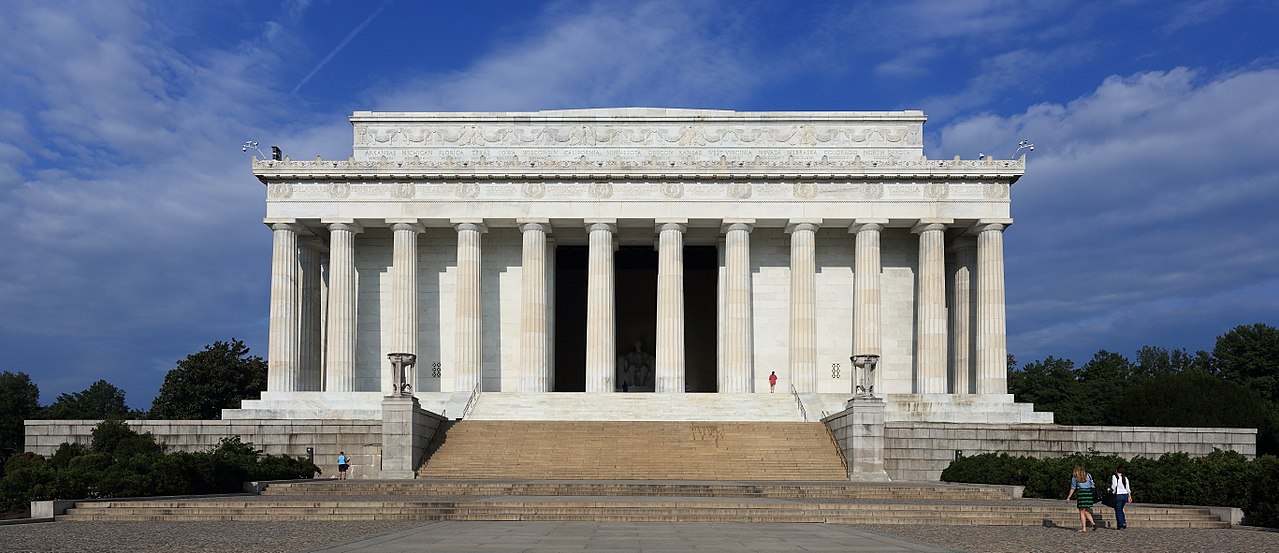
The Lincoln Memorial on the National Mall.© Martin Falbisoner · CC BY-SA 3.0 Getting there: Amtrak Philadelphia → Washington DC (about 2h)
Continue to Washington DC, the grand capital of the United States. Walk the National Mall, the green spine lined with the country's defining monuments — the domed Capitol at one end, the Lincoln Memorial at the other, with the towering Washington Monument between. Pause at the Lincoln Memorial, where Martin Luther King gave his "I Have a Dream" speech.
The National Mall at dusk is stirring — the Lincoln Memorial glowing, its great seated statue gazing down the reflecting pool to the Washington Monument and the Capitol beyond, the whole sweep of American ideals laid out in marble.
Our take
The Mall is bigger than it looks — comfortable shoes are a must, or use the bike-share. Sunset and after-dark are the most beautiful (and coolest) times to see the monuments.
Highlights
- ✦ The National Mall
- ✦ Lincoln Memorial & Capitol
- 6

The Washington Monument at dusk.© Diliff · CC BY-SA 2.5 
The south facade of the White House.© Ad Meskens · CC BY-SA 3.0 Dive into the Smithsonian, a constellation of superb museums lining the Mall — Air and Space, Natural History, American History, the moving National Museum of African American History and Culture — all free to enter. See the White House from Pennsylvania Avenue, and round off with the Jefferson and memorials by the Tidal Basin.
That the Smithsonian museums — moon landers, dinosaurs, the Star-Spangled Banner, the story of a nation — are free to all is one of the great gifts of American public life, and you could happily lose days among them.
Our take
You can't see all the Smithsonians — pick two or three. Air and Space and African American History are the most popular, so go early or book timed passes.
Highlights
- ✦ Smithsonian museums
- ✦ The White House
- 7

Heading home... already planning the next trip.© Tobias1984 · CC BY-SA 3.0 Getting there: Fly home from Washington (IAD/DCA), or return to NYC
A final morning in the capital, then the journey home. Want more? The 15-day route adds historic Boston, the thundering Niagara Falls and the lighthouses, beaches and famous autumn colours of New England.
A week on the East Coast — the electricity of New York, the birth of a nation in Philadelphia, the monuments of Washington — delivers the headline icons of America, and leaves you wanting to explore beyond the cities.
Our take
Washington's airports are well connected, or hop the Amtrak back to New York to fly home from there. Leave time for US airport security.
Highlights
- ✦ Last capital morning
- ✦ Fly home
Where to stay
The best neighbourhood to base yourself in each area, by budget. We point you to the right zone — then you pick and book the place that fits.
New York City
- Backpacker · Lower East Side / Brooklyn
- Hostels and budget hotels in hip, well-connected neighbourhoods.
- Mid-range · Midtown / Chelsea
- Comfortable hotels central to the sights and transport.
- Comfort · Midtown / Central Park
- Upscale hotels near Fifth Avenue and the park.
Washington DC
- Backpacker · Dupont Circle / U Street
- Hostels and budget stays in lively, walkable areas.
- Mid-range · Downtown / Penn Quarter
- Comfortable hotels near the Mall and museums.
- Comfort · Georgetown
- Upscale hotels in the elegant, historic riverside district.
Boston
- Backpacker · Fenway / Cambridge
- Hostels and budget rooms in studenty, well-connected areas.
- Mid-range · Back Bay / Downtown
- Comfortable hotels walkable to the Freedom Trail and shops.
- Comfort · Beacon Hill / Back Bay
- Elegant hotels in the historic heart of the city.
Cape Cod & the coast
- Backpacker · Hyannis / Provincetown hostels
- Budget inns and hostels in the main Cape towns.
- Mid-range · Chatham / Provincetown
- Classic Cape inns and B&Bs near the beaches.
- Comfort · Cape & islands resorts
- Upscale seaside resorts on the Cape, Martha's Vineyard or Nantucket.
New England & Niagara
- Backpacker · Town motels & inns
- Budget motels in the foliage towns and near Niagara Falls.
- Mid-range · Vermont / White Mountains inns
- Cosy country inns and B&Bs in the villages and hills.
- Comfort · Resort inns (Stowe, Woodstock)
- Upscale country resorts and historic grand inns.
We may earn a commission from bookings made through these links, at no extra cost to you.
At a glance
Best time to go
Late spring (May–June) and early autumn (September–October) are the sweet spots — warm, sunny days and comfortable evenings. Autumn is special for New England's world-famous fall foliage, usually peaking late September to mid-October. Summer (July–August) is hot and humid in the cities but great for the beaches; winter is cold and snowy, magical at Christmas in New York but tough for touring. Washington's cherry blossoms bloom around late March to April.
Currency
USD (US dollar, $)
Language
English is the language, with Spanish very widely spoken, especially in big cities like New York. You'll have no trouble getting by in English throughout.
Visa & entry
Most visitors from Visa Waiver Program countries (including the EU, UK, Australia and others) need an approved ESTA, applied for online in advance, to enter for tourism for up to 90 days. Others may need a B-2 visitor visa. Rules change, so always confirm the current requirements for your nationality well before you travel.
Daily budget
The US East Coast, especially New York, is expensive. Plan roughly €180–320 per person per day for comfortable hotels, eating out, intercity trains and attractions; budget travellers using hostels, delis and public transport spend less, while top hotels and shows cost much more. Remember that sales tax is added at the till and tipping (15–20% in restaurants) is expected. Figures are approximate.
Getting around
The Northeast Corridor has the USA's best train service: Amtrak links New York, Philadelphia, Washington and Boston frequently and comfortably (the fast Acela is pricier). Within the cities, use the excellent subways and walk — you don't want a car in New York or Boston. For Niagara, the Finger Lakes, Cape Cod and Acadia, a hire car gives the freedom to explore, and remember Americans drive on the right.
Safety
The tourist areas of the East Coast cities are generally safe, and crime is far lower than the headlines suggest, but use normal big-city sense: stay aware on the subway at night, keep valuables secure, and stick to well-populated areas. Healthcare is excellent but very expensive, so comprehensive travel insurance is essential. Summers are hot and humid; winters can bring serious cold and snow.
Connectivity
Connectivity is excellent. A US eSIM or local SIM (or a travel plan from your provider) gives strong coverage, and free Wi-Fi is everywhere — hotels, cafés, museums, even the subway stations in New York. Bring a US plug adapter (type A/B, 120V).
What to pack — USA East Coast
Our recommended gear for this trip — country-specific picks first, then the travel essentials we never leave home without.
- 👟Comfortable walking shoes→
- 🧥Layers (changeable weather)→
- 🔌US plug adapter→
- 🌂Compact umbrella→
- 🔌Universal travel adapter→
- 🧳Packing cubes→
- 🔋Power bank→
- 🎒Packable daypack→
- 💧Filtered water bottle→
- ⛑️Travel first-aid kit→
Amazon affiliate links — we may earn a small commission at no extra cost to you.
Frequently asked questions
When is the best time to visit the US East Coast? +
Late spring (May–June) and early autumn (September–October) are ideal — warm and comfortable. Autumn is magical for New England's fall foliage (peaking late September to mid-October). Summer is hot and humid in the cities but great for the beaches; winter is cold and snowy, festive in New York but harder for touring. Washington's cherry blossoms bloom around late March–April.
Do I need a visa or ESTA? +
Most visitors from Visa Waiver Program countries (the EU, UK, Australia and others) need an approved ESTA, applied for online in advance, for tourist stays of up to 90 days. Others may need a B-2 visa. Note that crossing to the Canadian side of Niagara and back is a separate border crossing needing the right documents. Always confirm current rules for your nationality.
How do I get around the East Coast? +
The Amtrak Northeast Corridor links New York, Philadelphia, Washington and Boston frequently and comfortably — the easy way between the big cities. Within them, use the excellent subways and walk; don't rent a car for the cities. For Niagara, Cape Cod, New England and Acadia, a hire car gives the freedom to explore (Americans drive on the right).
What should I budget, and how does tipping work? +
The East Coast, especially New York, is expensive — budget from roughly €180–320 per person per day at a mid-range. Remember that sales tax is added at the register (not shown on price tags), and tipping is expected: 15–20% in restaurants, a dollar or two per drink at bars, and a few dollars for housekeeping and taxis. Comprehensive travel insurance is essential given US healthcare costs.
Sources
Last reviewed on June 12, 2026Facts in this guide were checked against the following sources.
- Visit The USA — official tourism — Destinations and travel basics
- ESTA — US Customs and Border Protection — ESTA / entry requirements
- Amtrak — Northeast Corridor trains
- US National Park Service — Acadia, the National Mall & more
⚠️ Prices, opening hours and transport times change — always verify the latest details before you travel.
Keep exploring
More day-by-day itineraries to inspire your next trip.

Mexico
Mexico City and Teotihuacán, Oaxaca, the Maya cities of the Yucatán, cenotes and the Caribbean.

Japan
Neon cities, ancient temples and bullet trains — the perfect first trip to Asia.

Italy
Ancient ruins, Renaissance art, impossible coastlines and the best food on earth.

Thailand
Golden temples, jungle and elephants, street food and impossibly blue islands.

Vietnam
Limestone bays, lantern-lit towns, terraced mountains and the food of your life.

Indonesia
Smoking volcanoes, rice-terrace temples, turquoise islands and dragons.