

Southern Europe
Italy
Ancient ruins, Renaissance art, impossible coastlines and the best food on earth.
- Rome
- Florence & Tuscany
- Venice
- Amalfi Coast
- Sicily
- The Dolomites
Italy is almost unfair: 2,000 years of history, half the world’s great art, dream coastlines and a meal worth remembering on every corner — all linked by fast, easy trains. These routes follow the classic Rome–Florence–Venice “grand tour” and extend south to the Amalfi Coast and Sicily, and north to the Dolomites as you add days.
Build your trip
Tune it to you, then export it.
Length
Travel style
Your interests
The classic first-timer “grand tour”: imperial Rome, Renaissance Florence and the canals of Venice.
Daily budget:≈ €100–200 / day
Three-star hotels or B&Bs, trattoria meals, high-speed trains booked ahead and the main paid sights.
Day by day
- 1

Trastevere: ivy, cobbles and Rome's best dinners.© Krzysztof Golik · CC BY-SA 4.0 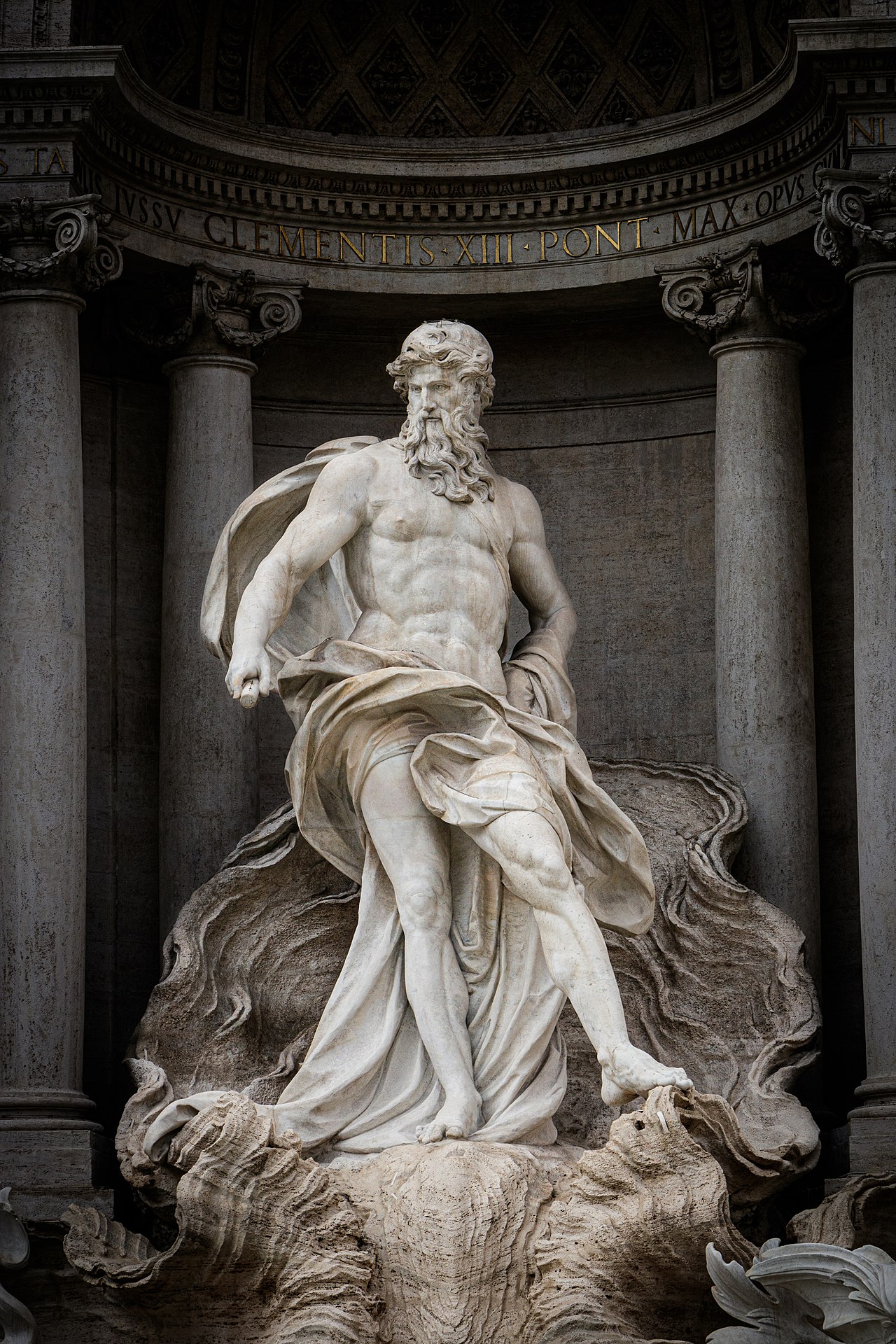
Toss a coin in the Trevi and you'll be back.© Tomascastelazo · CC BY-SA 4.0 Get from the airport into the centre (the Leonardo Express train from Fiumicino is easiest), drop your bags and just walk. Toss a coin into the Trevi Fountain, then cross the river for dinner in the ivy-draped lanes of Trastevere.
Rome doesn’t ease you in — you turn a corner and there’s a 2,000-year-old column casually holding up a café. That first floodlit evening walk, gelato in hand, is when it hits you that you’re actually here.
Our take
Don’t over-plan tonight — Rome is best on foot and slightly lost. Eat dinner late, like the Romans, and book your big sights (Colosseum, Vatican) online now to skip the queues tomorrow.
Highlights
- ✦ Trevi Fountain
- ✦ Dinner in Trastevere
- 2
The Colosseum, 2,000 years of Rome in one ring.© Wilfredor · CC0 
The Roman Forum, the old heart of the empire.© Nicholas Hartmann · CC BY-SA 4.0 
The Pantheon and its perfect 2,000-year-old dome.© Jebulon · CC0 Spend the morning in the heart of the empire: the mighty Colosseum, then the Roman Forum and Palatine Hill where it all began. In the afternoon, walk to the Pantheon — the best-preserved building of antiquity — and Piazza Navona.
Standing on the floor of the Colosseum, you can almost hear the roar of fifty thousand people. Then you reach the Pantheon, look up through that 2,000-year-old hole in the dome, and realise the Romans were just… better at this than they had any right to be.
Our take
Book a timed Colosseum ticket (ideally one that includes the Forum) well ahead — same-day queues are brutal. Go early or late to dodge both the crowds and the midday heat.
Highlights
- ✦ Colosseum
- ✦ Roman Forum & Palatine
- ✦ Pantheon
- 3
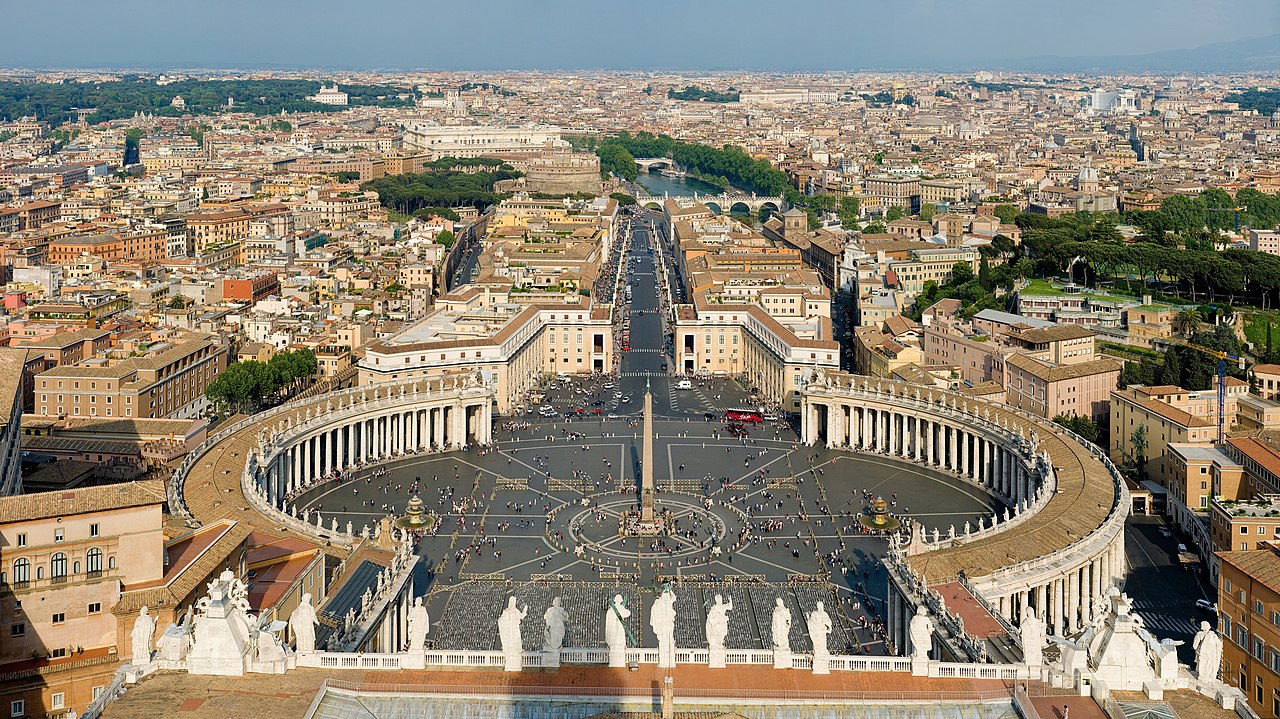
St Peter's Square and Bernini's colonnade.© Diliff · CC BY-SA 3.0 
Endless galleries on the way to the Sistine Chapel.© Livioandronico2013 · CC BY-SA 4.0 Dedicate the day to the world’s smallest country: the vast St Peter’s Basilica and its square, then the Vatican Museums, a marathon of galleries that ends at Michelangelo’s Sistine Chapel ceiling. Climb the dome for a view over all of Rome.
You shuffle through kilometres of golden corridors, half-overwhelmed, and then you step into the Sistine Chapel, look up, and the whole room goes quiet. Some things really do live up to five centuries of hype.
Our take
Book the first entry of the morning (or a “skip-the-line” tour) — the Vatican Museums get unbearably packed. Dress code is enforced: shoulders and knees covered for the basilica and chapel.
Highlights
- ✦ St Peter’s Basilica
- ✦ Vatican Museums
- ✦ Sistine Chapel
- 4
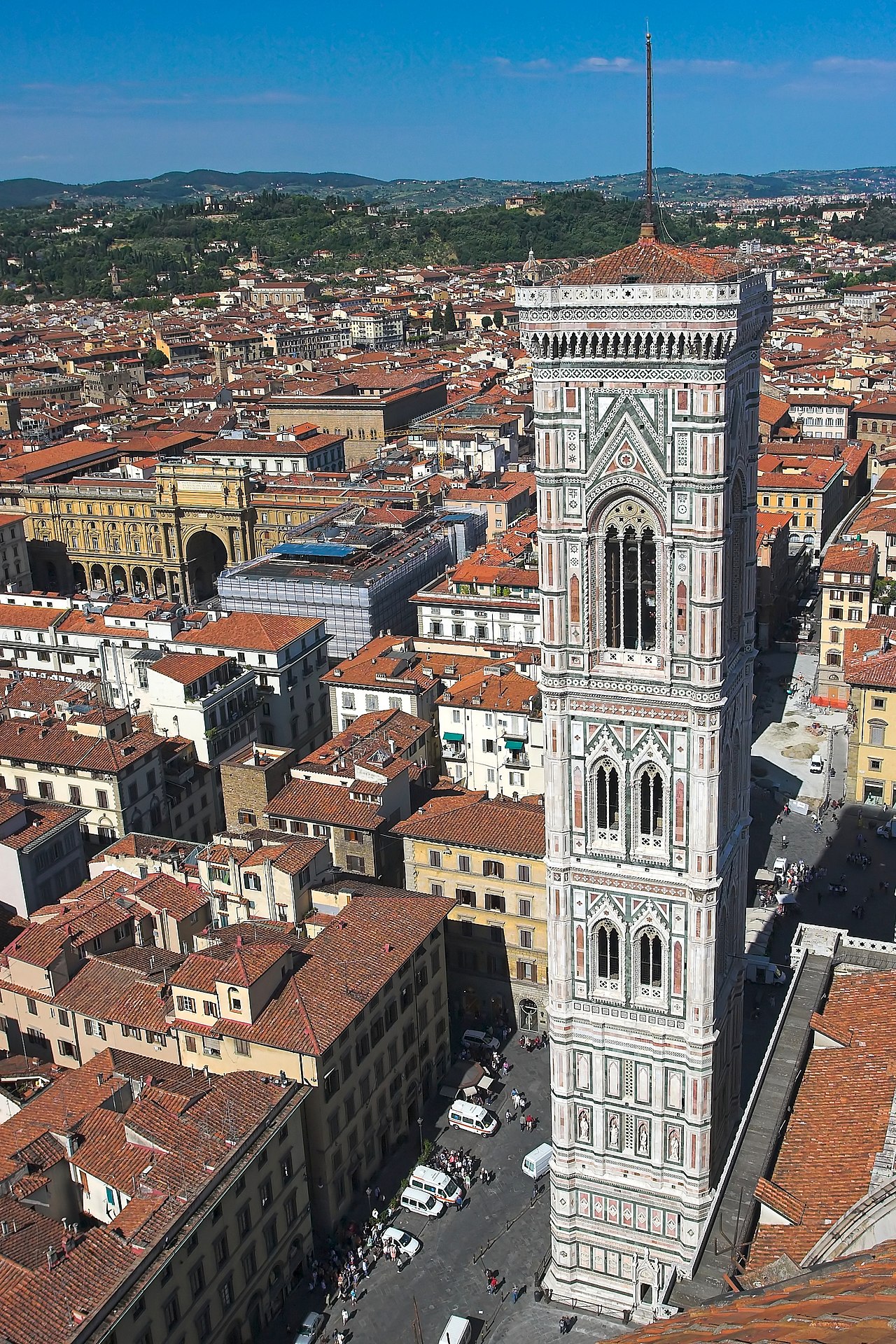
Brunelleschi's dome crowning Florence.© Thermos · CC BY-SA 2.5 
The Ponte Vecchio, lined with goldsmiths since the 1300s.© Martin Falbisoner · CC BY-SA 3.0 Getting there: High-speed train Rome → Florence (about 1h30m)
A fast train whisks you to Florence in an hour and a half. Drop your bags and meet the icons: Brunelleschi’s enormous Duomo, the goldsmith-lined Ponte Vecchio over the Arno, and the elegant Piazza della Signoria.
Florence is tiny after Rome — a city you cross on foot in twenty minutes — but every one of those minutes hides a fresco, a statue or a palazzo. The first time the Duomo’s red dome appears at the end of a narrow street, you’ll stop dead.
Our take
Climb either the Duomo or Giotto’s bell tower for the classic rooftop view (book the Duomo ahead). And buy your fast-train tickets early — prices jump as seats fill.
Highlights
- ✦ Florence Cathedral (Duomo)
- ✦ Ponte Vecchio
- 5

Michelangelo's David, marble made human.© Mariordo · CC BY-SA 4.0 
Florence at golden hour from Piazzale Michelangelo.© Diego Delso · CC BY-SA 4.0 Come face to face with Michelangelo’s David at the Accademia, then dive into the Uffizi, home to Botticelli’s Birth of Venus and more masterpieces than seems reasonable. Cross to the artisan Oltrarno and climb to Piazzale Michelangelo for sunset.
Photos don’t prepare you for the David: five metres of marble so alive you expect him to breathe. Hours later, watching the sun sink behind the Duomo from Piazzale Michelangelo, you’ll understand why people fall hard for this city.
Our take
Pre-book the Accademia and Uffizi (separate tickets) or you’ll waste half a day queueing. Skip the David souvenirs and have an aperitivo in the Oltrarno instead — it’s where Florentines actually go.
Highlights
- ✦ David at the Accademia
- ✦ Uffizi Gallery
- ✦ Piazzale Michelangelo at sunset
- 6

St Mark's Square, 'the drawing room of Europe'.© Canaletto · Public domain 
The Rialto arching over the Grand Canal.© kallerna · CC BY-SA 4.0 
Gondolas on the Grand Canal at dusk.© Benh LIEU SONG ( Flickr ) · CC BY-SA 4.0 Getting there: High-speed train Florence → Venice (about 2h)
Step off the train and straight onto the Grand Canal — Venice has no cars, only boats. Find your way to St Mark’s Square and basilica, cross the Rialto Bridge, then get gloriously lost in the back lanes as the day-trippers thin out.
Venice should be impossible, and somehow it’s been here a thousand years: palaces rising straight out of green water, the slap of a gondola oar, a bridge over every other street. Wander after dark, when the crowds vanish and it feels like the set of a dream.
Our take
Skip the €80+ gondola if it’s not your thing — the €2 traghetto across the Grand Canal and the vaporetto down it give you the water for a fraction of the price. And eat at least two canals away from St Mark’s.
Highlights
- ✦ St Mark’s Square & Basilica
- ✦ Rialto Bridge
- ✦ Grand Canal by vaporetto
- 7

Burano and its rainbow of fishermen's houses.© Marco Ober · CC BY-SA 4.0 
Arrivederci, Italia… already planning the next trip.© Shocksingularity · CC0 Getting there: Venice Marco Polo Airport is ~20 min by bus or water taxi
If your flight allows, take the vaporetto out to colourful Burano for the morning, then make your way to Marco Polo Airport. Hungry for more? This is exactly where the 15-day route keeps going, south to Naples and the Amalfi Coast.
You’ll leave Italy already plotting the return — the regions you skipped, the dishes you didn’t try, the village someone swore you’d love. Nobody does Italy just once.
Our take
Leave more time than you think for Marco Polo — getting through Venice with luggage is slow. Spend your last euros on a proper espresso standing at the bar, the Italian way.
Highlights
- ✦ Burano island
- ✦ Fly home from Venice
Where to stay
The best neighbourhood to base yourself in each area, by budget. We point you to the right zone — then you pick and book the place that fits.
Rome
- Backpacker · Termini / Monti
- Hostels by the main station; Monti is the trendy, walkable old quarter.
- Mid-range · Centro Storico / Trastevere
- Walk to everything; Trastevere brings the cobbled, lively evening buzz.
- Comfort · Piazza di Spagna / Veneto
- Elegant hotels by the Spanish Steps and the smart shopping streets.
Florence
- Backpacker · Near Santa Maria Novella
- Hostels by the station, a short walk from the Duomo.
- Mid-range · Centro / Duomo
- In the heart of the historic centre, everything on foot.
- Comfort · Oltrarno / Lungarno
- Boutique and riverside hotels with views and a quieter, artisan feel.
Venice
- Backpacker · Mestre / Cannaregio
- Mestre (mainland) is far cheaper with a quick train in; Cannaregio is the local island choice.
- Mid-range · Cannaregio / Dorsoduro
- Canalside hotels away from the crush, still walkable to San Marco.
- Comfort · San Marco
- Palazzo hotels in the heart of the action, some on the Grand Canal.
Cinque Terre
- Backpacker · La Spezia / Riomaggiore
- La Spezia is a cheaper base on the train line; Riomaggiore is the liveliest village.
- Mid-range · Monterosso al Mare
- The only village with a real beach and the most hotels.
- Comfort · Vernazza / boutique villages
- A handful of boutique rooms in the prettiest villages — book early.
Naples & Amalfi Coast
- Backpacker · Naples centro / Sorrento
- Naples for hostels and pizza; Sorrento for budget rooms near the coast trains and ferries.
- Mid-range · Sorrento
- The best all-round base for the coast — ferries to Capri and buses to Positano.
- Comfort · Positano / Ravello
- Clifftop hotels with the postcard views — stunning and pricey.
Milan
- Backpacker · Near Centrale / Navigli
- Hostels by the central station; Navigli for canalside nightlife.
- Mid-range · Navigli / Brera
- Arty, walkable neighbourhoods full of bars and restaurants.
- Comfort · Quadrilatero / Duomo
- Luxury hotels in the fashion district, steps from the cathedral.
Lake Como
- Backpacker · Como town
- The cheapest base and the train/ferry hub at the south of the lake.
- Mid-range · Varenna / Menaggio
- Charming lakeside villages, well connected by ferry.
- Comfort · Bellagio / lakeside villas
- The famous “pearl of the lake” and grand villa hotels.
We may earn a commission from bookings made through these links, at no extra cost to you.
At a glance
Best time to go
Spring (April–June) and autumn (September–October) are ideal: warm, long days and lighter crowds. July–August is hot, crowded and pricey (and many businesses close around mid-August). Winter is quiet and cold in the north, with skiing in the Dolomites.
Currency
EUR (€)
Language
Italian. English is common in tourist areas and harder to find in small towns — a few Italian pleasantries go a long way.
Visa & entry
Italy is in the Schengen Area. EU/EEA citizens move freely; many other nationalities (US, UK, etc.) can visit visa-free for up to 90 days in any 180. From 2025 the ETIAS travel authorisation may apply — confirm current rules for your nationality.
Daily budget
Mid-range travellers should plan roughly €100–200 per person per day including accommodation, food and transport. Figures are approximate and vary a lot between big cities/coast (pricier) and inland towns.
Getting around
Italy’s high-speed trains (Trenitalia Frecce and Italo) link the big cities fast and cheaply if you book ahead; regional trains reach smaller towns. Don’t drive into city centres (ZTL restricted zones bring hefty fines) — but a car is great for the Tuscan countryside, Sicily and the Dolomites. Ferries serve the islands and the Amalfi Coast.
Safety
Italy is very safe. The main nuisance is pickpocketing in crowded tourist spots, busy trains and the Naples/Rome metros — keep valuables zipped and close.
Connectivity
EU SIMs roam at no extra cost; visitors from elsewhere can grab a cheap local SIM (TIM, Vodafone, WindTre) or a travel eSIM at the airport. Wi-Fi is widely available.
What to pack — Italy
Our recommended gear for this trip — country-specific picks first, then the travel essentials we never leave home without.
- 👟Comfortable walking shoes→
- 🧣Shawl to cover shoulders (churches)→
- 👜Anti-theft crossbody bag→
- 🔌Universal travel adapter→
- 🧳Packing cubes→
- 🔋Power bank→
- 🎒Packable daypack→
- 💧Filtered water bottle→
- ⛑️Travel first-aid kit→
Amazon affiliate links — we may earn a small commission at no extra cost to you.
Frequently asked questions
How many days do I need for Italy? +
Seven days covers the classic Rome–Florence–Venice highlights at a brisk pace. Ten to fifteen days is the sweet spot for a relaxed first trip that adds Naples, the Amalfi Coast and Tuscany; three weeks lets you reach Sicily and the Dolomites.
Should I rent a car? +
Not for the big cities — trains are faster, and city centres have restricted “ZTL” zones with automatic fines and no parking. A car is worth it for the Tuscan countryside, Sicily and the Dolomites, where public transport is thin.
Can I do the Amalfi Coast and Cinque Terre without a car? +
Yes, and it’s often easier. Both are best explored by train, ferry and local bus — driving the Amalfi coast road in summer is slow and stressful, and the Cinque Terre villages are largely car-free.
Sources
Last reviewed on June 2, 2026Facts in this guide were checked against the following sources.
- ENIT — Italia.it (official tourism) — Destinations, regions and seasons
- EU — ETIAS / Schengen entry — Visa & entry requirements
- Trenitalia (official rail) — Trains & getting around
- UNESCO World Heritage — Italy — Heritage sites (Pompeii, Dolomites, Cinque Terre…)
⚠️ Prices, opening hours and transport times change — always verify the latest details before you travel.
Keep exploring
More day-by-day itineraries to inspire your next trip.

Greece
The Acropolis, Cyclades island-hopping, Santorini sunsets, Meteora and ancient Greece.

Turkey
Istanbul across two continents, Cappadocia's balloons, Pamukkale, Ephesus and the turquoise coast.

Spain
Madrid and Toledo, Andalusia and the Alhambra, Gaudí's Barcelona and the Basque coast.

Japan
Neon cities, ancient temples and bullet trains — the perfect first trip to Asia.

Thailand
Golden temples, jungle and elephants, street food and impossibly blue islands.

Vietnam
Limestone bays, lantern-lit towns, terraced mountains and the food of your life.