

Southeast Asia
Vietnam
Limestone bays, lantern-lit towns, terraced mountains and the food of your life.
- Hanoi
- Ha Long Bay
- Hoi An
- Sapa rice terraces
- Mekong Delta
- Street food
Vietnam is a long, narrow country that crams in a staggering amount: the karst seascape of Ha Long Bay, the lantern-lit old town of Hoi An, the rice terraces of Sapa and the buzzing chaos of Hanoi and Saigon — all knitted together by some of the best, cheapest food on earth. These routes run the classic north–south arc and extend to mountains, caves and islands as you add days.
Build your trip
Tune it to you, then export it.
Length
Travel style
Your interests
The essential first taste: chaotic Hanoi, an overnight cruise in Ha Long Bay and the lantern-lit old town of Hoi An.
Daily budget:≈ €40–80 / day
Comfortable hotels, a mid-range Ha Long cruise, restaurant meals, domestic flights and day tours.
Day by day
- 1

The red bridge to Ngoc Son temple, Hanoi.© Gary Todd from Xinzheng, China · CC0 
Hanoi's silky egg coffee.© Newone · CC BY-SA 4.0 Get from the airport into the city, drop your bags and step into the chaos of Hanoi’s Old Quarter: a maze of narrow streets, scooters by the thousand and food on every corner. Wind down with a circuit of Hoan Kiem Lake and a thick, sweet Hanoi egg coffee.
Crossing your first Hanoi street is a rite of passage — you just step out, walk slowly, and trust the river of scooters to part around you. Somewhere in that beautiful pandemonium, with a coffee in hand, the city wins you over.
Our take
Don’t plan anything demanding tonight — let the Old Quarter overwhelm you gently. Use Grab (cars and bikes) instead of haggling taxis, and try egg coffee at least once; it’s a Hanoi institution.
Highlights
- ✦ Old Quarter
- ✦ Hoan Kiem Lake
- 2

Hanoi's chaotic, charming Old Quarter.© Jakub Hałun · CC BY 4.0 
The Temple of Literature, Vietnam's first university.© Jakub Hałun · CC BY 4.0 
Pho, Vietnam's beloved noodle soup.© Vyacheslav Argenberg · CC BY 4.0 Spend the day soaking up Hanoi: the serene Temple of Literature (Vietnam’s first university), the Ho Chi Minh Mausoleum complex, and the thrillingly narrow Train Street where cafés line the live railway. Eat your way through bun cha, pho and bia hoi (fresh draft beer) on plastic stools.
On Train Street, you sip a coffee inches from the rails until a whistle sends everyone scrambling back as a real train thunders past, close enough to touch. It shouldn’t be allowed — and it’s gloriously, unmistakably Hanoi.
Our take
Eat where the locals sit on tiny stools, not in the tourist restaurants — it’s tastier and a tenth of the price. Catch a water-puppet show in the evening; it’s charmingly, uniquely Vietnamese.
Highlights
- ✦ Temple of Literature
- ✦ Train Street
- ✦ Street-food crawl
- 3
Ha Long Bay's thousands of limestone islands.© Adam Jones Adam63 · CC BY-SA 3.0 
Ha Long Bay, a UNESCO seascape of karsts.© Kris Martyn · CC BY-SA 4.0 Getting there: Transfer to Ha Long / Lan Ha Bay (about 2h30m–3h)
Head to the coast for an overnight cruise through Ha Long Bay (or quieter Lan Ha Bay) — thousands of jungle-topped limestone islands rising out of emerald water. Kayak into hidden lagoons, swim, eat fresh seafood and watch the sun set over the karsts from the deck.
Waking up anchored among the karsts, mist curling off glassy water and not another sound for miles, is one of those travel mornings you’ll replay for years. Ha Long earns every bit of its fame.
Our take
Pay a little more for a reputable boat and consider Lan Ha or Bai Tu Long Bay — same beauty, far fewer crowds. One night aboard is plenty; two is blissful if you have time.
Highlights
- ✦ Overnight junk cruise
- ✦ Kayaking the lagoons
- 4

Hoi An's old town aglow with lanterns.© Christophe95 · CC BY-SA 4.0 Getting there: Cruise back to Hanoi, then fly to Da Nang for Hoi An (about 1h15m)
Sail back to shore in the morning, then fly down to Da Nang and transfer to Hoi An, the lantern-lit jewel of central Vietnam. Arrive in time to see the car-free old town glow after dark, its ancient houses reflected in the river.
Hoi An after sunset is pure enchantment — hundreds of silk lanterns glowing gold over the river, paper boats with candles drifting downstream, the whole town swapped from daytime postcard to nighttime dream.
Our take
Stay over in Hoi An rather than day-tripping from Da Nang — the town is at its best in the evening and the early morning, once the tour buses have gone.
Highlights
- ✦ Lantern-lit old town
- ✦ Riverside at night
- 5

Hoi An's 400-year-old Japanese Bridge.© Vuong Tri Binh · CC BY-SA 4.0 
Lantern boats on the Hoi An river.© Kuroczynski · CC BY-SA 4.0 Explore the honey-coloured old town on foot: the 400-year-old Japanese Covered Bridge, ancient merchant houses and assembly halls. Get clothes tailor-made (a Hoi An tradition), cycle out to the rice paddies, and end with a lantern boat on the Thu Bon River.
Hoi An feels like a town that time forgot in the best way — wooden shutters, bougainvillea, a tailor measuring you for a suit that’ll be ready by morning. Float a candle lantern on the river at night and make a wish; everyone does.
Our take
If you want tailoring, order on your first day so there’s time for fittings. Rent a bicycle — the surrounding rice fields and An Bang beach are a flat, easy, lovely ride.
Highlights
- ✦ Japanese Covered Bridge
- ✦ Tailor-made clothes
- ✦ Lantern boat on the river
- 6

The Cham temple ruins of My Son.© Chainwit. · CC BY 4.0 
Banh mi, the perfect Vietnamese sandwich.© Jimmy Chen · CC BY-SA 4.0 Take an early trip to My Son, the jungle-clad ruins of the ancient Cham civilisation (think a mossy, miniature Angkor). Back in Hoi An, join a Thai—Vietnamese cooking class with a market tour, or simply hit the beach and graze the famous banh mi and cao lau.
My Son at dawn, with birdsong, drifting mist and crumbling brick towers a thousand years old, has an almost lost-world hush. Later, frying your own banh xeo in a Hoi An kitchen, you realise just how much craft hides in this “simple” food.
Our take
Go to My Son for the first tour of the day to beat the heat and crowds. A cooking class here is one of the best-value half-days in Vietnam — and you’ll cook the dishes back home for years.
Highlights
- ✦ My Son Sanctuary
- ✦ Vietnamese cooking class
- 7

Tam biet, Vietnam… until next time.© Shocksingularity · CC0 Getting there: Fly home from Da Nang (or connect via Hanoi/Saigon)
Squeeze in a last lantern-lit breakfast or a beach swim near Da Nang, then head to the airport. Still hungry for Vietnam? The 15-day route keeps going — to the imperial city of Hue, Saigon and the Mekong Delta.
You’ll fly out already missing it: the coffee, the chaos, the kindness, the way a plastic stool on a Hanoi pavement served the best meal of your trip. Vietnam gets under your skin fast.
Our take
Learn “xin chào” (hello) and “cảm ơn” (thank you) — they earn warm smiles everywhere. Spend your last dong on coffee beans or a tailored shirt to take home.
Highlights
- ✦ Last bowl of pho
- ✦ Fly home from Da Nang
Where to stay
The best neighbourhood to base yourself in each area, by budget. We point you to the right zone — then you pick and book the place that fits.
Hanoi
- Backpacker · Old Quarter
- Hostels and street food in the chaotic, brilliant heart of the city.
- Mid-range · Hoan Kiem / Old Quarter
- Boutique hotels by the lake, walkable to everything.
- Comfort · French Quarter
- Grand colonial-era hotels on wide, leafy boulevards.
Sapa
- Backpacker · Sapa town
- Cheap guesthouses in town, handy for trek operators.
- Mid-range · Town with valley views
- Hotels on the ridge overlooking the rice terraces.
- Comfort · Ta Van valley lodges
- Eco-lodges and homestays down in the terraced valleys, or a luxury resort in town.
Ha Long Bay
- Backpacker · Budget overnight cruise
- The bay is best slept on the water — book a well-reviewed budget cruise.
- Mid-range · Overnight cruise boat
- A comfortable cabin cruise is the classic way to do Ha Long.
- Comfort · Luxury cruise / Lan Ha Bay
- Premium boats, often via the quieter, equally stunning Lan Ha Bay.
Ninh Binh
- Backpacker · Tam Coc
- Cheap homestays among the karsts and rice fields.
- Mid-range · Tam Coc / Trang An
- Eco-lodges and bungalows with pools under the limestone peaks.
- Comfort · Boutique resorts
- Stylish resorts with dramatic mountain-and-paddy views.
Hoi An
- Backpacker · Near the Old Town
- Hostels and homestays a short walk or cycle from the lanterns.
- Mid-range · Between Old Town & An Bang
- Homestays with pools, free bikes to both the town and the beach.
- Comfort · An Bang / Cua Dai beach
- Beach resorts and spas a few minutes from the Old Town.
Ho Chi Minh City
- Backpacker · Pham Ngu Lao (District 1)
- The backpacker street — cheap beds, bars and tour desks.
- Mid-range · District 1 (Dong Khoi)
- Central hotels near Ben Thanh market and the main sights.
- Comfort · District 1 riverside
- High-rise luxury hotels with skyline and Saigon River views.
Phu Quoc
- Backpacker · Duong Dong / north Long Beach
- Budget rooms in the main town and the cheaper north of the beach.
- Mid-range · Long Beach (Bai Truong)
- Beachfront resorts with sunset views and a lively strip.
- Comfort · Bai Kem / Ong Lang
- Secluded five-star resorts on the island’s most beautiful beaches.
We may earn a commission from bookings made through these links, at no extra cost to you.
At a glance
Best time to go
Vietnam stretches across three climates, so there’s no single perfect month. Broadly, spring (March–April) and autumn (September–November) are the best all-round compromise. The far north is cool and misty in winter; the central coast (Hoi An, Hue) risks typhoons in October–November; the south is warm year-round. See the planner’s seasonal tips by month.
Currency
VND (₫)
Language
Vietnamese. English is common among younger people and in tourist areas, less so in the countryside — a translation app helps a lot.
Visa & entry
Most nationalities need a visa, but Vietnam’s online e-visa (commonly up to 90 days, single or multiple entry) is quick and easy to obtain in advance. Some countries enjoy short visa exemptions. Always confirm current rules for your nationality before you fly.
Daily budget
Vietnam is excellent value. Mid-range travellers should plan roughly €35–80 per person per day including accommodation, food, transport and tours; backpackers can go far lower. Figures are approximate.
Getting around
Cheap domestic flights (Vietnam Airlines, VietJet, Bamboo) link Hanoi, Da Nang and Saigon in a couple of hours and save big distances. The scenic Reunification Express train and comfortable sleeper buses run the coast. In cities use the Grab app; motorbikes rule the roads (cross slowly and steadily — they’ll flow around you).
Safety
Vietnam is very safe for travellers. The main hazards are the traffic (crossing a road full of scooters is the real challenge — walk slowly and predictably) and petty scams or overcharging; in Saigon, watch out for bag-snatching from passing motorbikes.
Connectivity
A cheap local SIM (Viettel, Mobifone) or a travel eSIM gives fast, cheap data nationwide, even in the mountains. Wi-Fi is everywhere — Vietnam runs on it.
What to pack — Vietnam
Our recommended gear for this trip — country-specific picks first, then the travel essentials we never leave home without.
- 🦟Mosquito repellent→
- 🧥Packable rain jacket→
- 🩴Travel sandals→
- 🔌Universal travel adapter→
- 🧳Packing cubes→
- 🔋Power bank→
- 🎒Packable daypack→
- 💧Filtered water bottle→
- ⛑️Travel first-aid kit→
Amazon affiliate links — we may earn a small commission at no extra cost to you.
Frequently asked questions
When is the best time to visit Vietnam? +
Because the country spans three climates, there’s no single perfect month. March–April and September–November are the best all-round compromise. The north is cool in winter, the central coast risks typhoons in October–November, and the south is warm year-round — see the planner’s seasonal tips.
North to south, or south to north? +
Either works well, as the country is essentially one long line. Most travellers go north to south (Hanoi to Saigon), which follows the classic route and the standard flight/train connections; reverse it if your dates or flights suit better.
Do I need a visa for Vietnam? +
Most nationalities do, but Vietnam’s online e-visa (commonly up to 90 days) is quick and easy to arrange before you travel; some countries also have short visa exemptions. Always check the current rules for your nationality.
Sources
Last reviewed on June 3, 2026Facts in this guide were checked against the following sources.
- Vietnam National Authority of Tourism — Destinations, regions and seasons
- Vietnam Immigration — official e-visa — Visa & entry requirements
- Vietnam Railways — Trains & getting around
- UNESCO World Heritage — Vietnam — Heritage sites (Ha Long, Hoi An, Hue, Phong Nha)
⚠️ Prices, opening hours and transport times change — always verify the latest details before you travel.
Keep exploring
More day-by-day itineraries to inspire your next trip.

Japan
Neon cities, ancient temples and bullet trains — the perfect first trip to Asia.

Thailand
Golden temples, jungle and elephants, street food and impossibly blue islands.

Indonesia
Smoking volcanoes, rice-terrace temples, turquoise islands and dragons.

China
The Great Wall, the Terracotta Army, pandas, karst rivers and neon Shanghai.
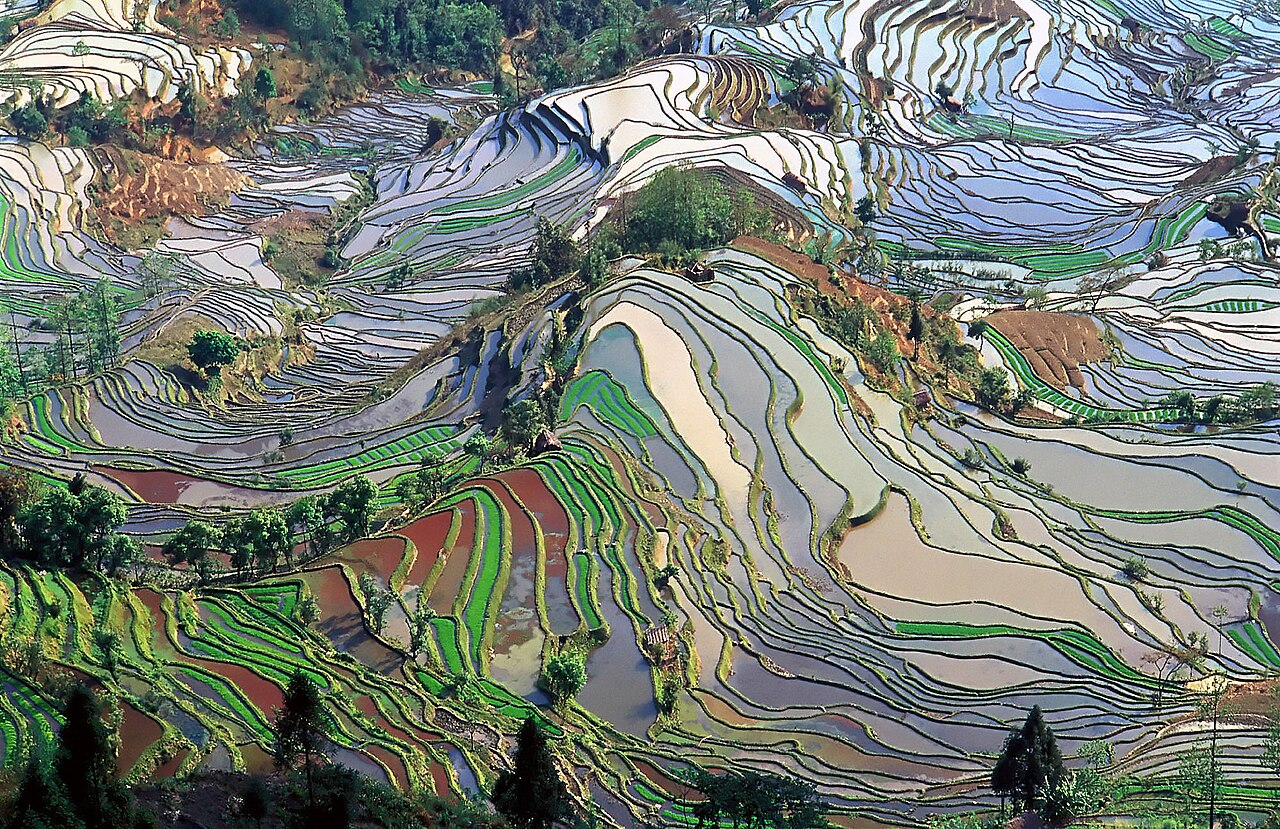
Yunnan, China
Rice-terrace mountains, old Naxi towns, snow peaks and the edge of Tibet.

India
The Taj Mahal, Rajasthan's forts and palaces, holy lakes and the green calm of Kerala.