

Southeast Asia
Cambodia
The temples of Angkor, a moving history, Mekong towns and palm-fringed islands.
- Angkor Wat
- Bayon & Angkor Thom
- Phnom Penh
- Battambang
- Kampot & Kep
- Koh Rong islands
Cambodia is one of Southeast Asia's most rewarding trips — and far more than just Angkor, extraordinary as those temples are. Begin in Siem Reap, base for the vast Angkor Archaeological Park: sunrise over Angkor Wat, the smiling faces of the Bayon, the jungle-strangled ruins of Ta Prohm. Then come the things many travellers skip: Phnom Penh, where a beautiful riverside capital sits alongside the sobering history of the Khmer Rouge; sleepy, French-flavoured Battambang and Kampot; the Mekong towns of Kratie with their rare river dolphins; the wild jungle of Mondulkiri; and finally the white-sand islands of Koh Rong. Warm, gentle people and some of the friendliest welcomes in Asia tie it all together.
Build your trip
Tune it to you, then export it.
Length
Travel style
Your interests
The essentials: the temples of Angkor from Siem Reap, the Tonlé Sap, and the capital Phnom Penh.
Daily budget:≈ €35–80 / day
Comfortable hotels, restaurant meals, private tuk-tuks and guides, the odd domestic flight and island ferry.
Day by day
- 1

The neon buzz of Pub Street, Siem Reap.© Christophe95 · CC BY-SA 4.0 Getting there: Fly into Siem Reap (SAI); short transfer to town
Arrive in Siem Reap, the welcoming town that serves as the base for Angkor. Shake off the journey, get your bearings, and dive into the buzz of the Old Market, the riverside and the famous Pub Street, all good food, cold drinks and easy energy. Sort your Angkor pass and an early start for tomorrow.
Siem Reap is a surprisingly fun, easy place to land — a small town that has grown up around the temples without losing its charm, with superb cheap food, a creative streak and that famously warm Cambodian welcome. It's the perfect soft landing before the wonders to come.
Our take
Buy your Angkor pass (1, 3 or 7-day) the afternoon before — buy it after about 5pm and you can sneak in for a free sunset that evening. Plan an early start tomorrow to beat the heat and crowds.
Highlights
- ✦ Old Market & Pub Street
- ✦ Get your Angkor pass
- 2
Angkor Wat mirrored at dawn — the world's largest religious monument.© Christophe95 · CC BY-SA 4.0 
The serene stone faces of the Bayon.© Jakub Hałun · CC BY-SA 4.0 The big day. Rise in the dark for sunrise over Angkor Wat, the largest religious monument on earth, its five towers mirrored in the reflecting pool as the sky turns pink. Explore its galleries and bas-reliefs, then head to walled Angkor Thom and the Bayon, where over two hundred giant, serene stone faces gaze out in every direction.
However many photos you've seen, watching the towers of Angkor Wat emerge from the dark and double in the still water as dawn breaks is genuinely unforgettable. And the Bayon is its equal in a different key — wander among those enigmatic half-smiling faces and the whole 12th-century Khmer empire feels suddenly, intensely close.
Our take
Hire a knowledgeable guide and a tuk-tuk for the day — the park is huge and the context transforms it. Carry lots of water, cover shoulders and knees (it's a sacred site), and pace yourself in the heat.
Highlights
- ✦ Angkor Wat sunrise
- ✦ The Bayon
- ✦ Angkor Thom
- 3

Giant tree roots swallowing Ta Prohm.© David Sim · CC BY 2.0 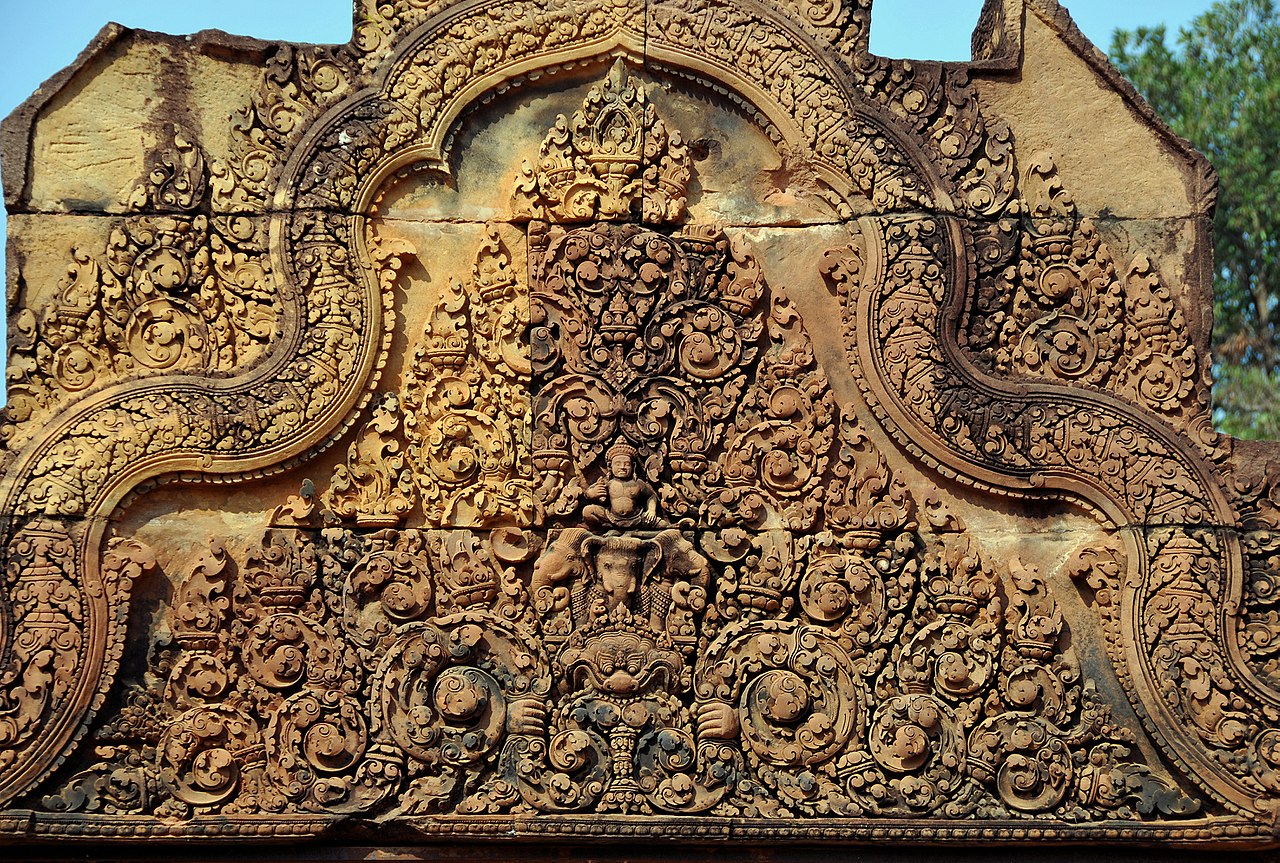
The pink-sandstone carvings of Banteay Srei.© Dennis G. Jarvis · CC BY-SA 2.0 A second temple day, at a gentler pace. Visit Ta Prohm, the famous "Tomb Raider" temple left half-swallowed by colossal silk-cotton tree roots, then drive out to Banteay Srei, a small 10th-century jewel carved from pink sandstone in astonishing, lace-like detail. Add a few quieter outlying temples to taste.
Ta Prohm is pure magic — giant roots pouring over doorways and crushing stone like something from a dream, the jungle and the temple locked in a slow embrace. And tiny Banteay Srei has the finest carving in all of Angkor; up close, the pink stone looks worked by jewellers, not masons.
Our take
Two days of temples is the sweet spot for most people — enough to see the greats without "temple fatigue". Banteay Srei is about 45 minutes out; pair it with the Landmine Museum nearby if it interests you.
Highlights
- ✦ Ta Prohm
- ✦ Banteay Srei
- 4

Stilted houses over the Tonlé Sap at Kampong Phluk.© PsamatheM · CC BY-SA 4.0 Getting there: Visit Tonlé Sap, then bus or short flight Siem Reap → Phnom Penh
In the morning, head out to the Tonlé Sap, Southeast Asia's great lake, to see a floating or stilted village such as Kampong Phluk — whole communities living on and above the water, with schools, shops and markets all afloat. Then travel on to Phnom Penh, Cambodia's riverside capital, by afternoon bus or a quick flight.
Gliding through a village where everything floats — kids paddling washtubs to school, a shopkeeper poling between houses — is a window into a way of life shaped entirely by the rising and falling lake. It's a world away from the temples, and all the better for it.
Our take
Choose a responsible community-based Tonlé Sap tour and skip the pushy "orphanage" and crocodile-farm add-ons. Kampong Phluk and Kampong Khleang feel more authentic and less touristy than the closest village to Siem Reap.
Highlights
- ✦ Floating village
- ✦ Tonlé Sap lake
- 5

The golden spires of Phnom Penh's Royal Palace.© Hanay · CC BY-SA 3.0 
The Silver Pagoda inside the Royal Palace.© Marcin Konsek · CC BY-SA 4.0 Explore the elegant side of the capital. Tour the Royal Palace, still the king's residence, with its glittering golden-roofed throne hall and the dazzling Silver Pagoda, its floor laid with thousands of silver tiles and home to an emerald and a life-size gold Buddha. Then stroll the breezy riverfront where the Mekong and Tonlé Sap meet, and visit the excellent National Museum of Khmer art.
Phnom Penh confounds expectations — a graceful, low-rise riverside city of palm-lined boulevards, gilded temples and faded French villas, with a fast-rising modern buzz. The Royal Palace gleams, the riverfront hums at golden hour, and the National Museum gathers the very best of Angkor-era sculpture under one roof.
Our take
Dress modestly for the palace (shoulders and knees covered) and go early before the heat. Catch sunset on the riverfront promenade, then eat your way along Street 240 or the night market.
Highlights
- ✦ Royal Palace
- ✦ Silver Pagoda
- ✦ Riverfront
- 6

The former S-21 prison, now a genocide museum.© Marcin Konsek · CC BY-SA 4.0 
The memorial stupa at the Choeung Ek Killing Fields.© Unknown · Public domain Today is sobering but essential: the Tuol Sleng Genocide Museum (S-21), a former school turned prison and torture centre, and the Choeung Ek Killing Fields just outside the city, where a memorial stupa holds the skulls of victims of the Khmer Rouge. It's a heavy morning, told with quiet dignity. Lighten the afternoon with the Art Deco Central Market and a relaxed riverside dinner.
Between 1975 and 1979 the Khmer Rouge killed perhaps a quarter of the country's people, and you cannot understand modern Cambodia without facing it. The audioguide at Choeung Ek, narrated in part by survivors, is devastating and deeply human — and the warmth of the people you meet afterwards lands all the harder for it.
Our take
Take the audioguides at both sites — they make all the difference. Go in the morning, be respectful with photos, and give yourself a gentle afternoon afterwards. It's a lot, but it matters.
Highlights
- ✦ Tuol Sleng (S-21)
- ✦ Choeung Ek
- ✦ Central Market
- 7

Heading home... already planning the next trip.© Tobias1984 · CC BY-SA 3.0 Getting there: Fly home from Phnom Penh (PNH)
A final riverside wander and some last souvenir shopping — Kampot pepper, silk, a krama scarf — then the flight out. Hungry for more? The 15-day route keeps going to laid-back Battambang, the colonial-flavoured riverside town of Kampot and Kep, and the white-sand islands of Koh Rong.
A week in Cambodia leaves a mark — humbled by Angkor, moved by Phnom Penh's history, and won over completely by the gentleness of its people. Most travellers fly home already plotting a return for the coast and the wild east.
Our take
Buy genuine Kampot pepper (the real thing is superb) and a krama, the checked Cambodian scarf, as souvenirs. Leave a buffer for Phnom Penh traffic to the airport.
Highlights
- ✦ Last souvenir shopping
- ✦ Fly home from Phnom Penh
Where to stay
The best neighbourhood to base yourself in each area, by budget. We point you to the right zone — then you pick and book the place that fits.
Siem Reap
- Backpacker · Pub Street / Old Market
- Hostels and cheap guesthouses in the lively heart, walkable to bars and food.
- Mid-range · Wat Bo / riverside
- Boutique hotels and pool guesthouses a short stroll from the action, but quieter.
- Comfort · Charles de Gaulle / west
- Luxury resorts and spa hotels on the road towards the temples.
Phnom Penh
- Backpacker · Riverside / BKK1
- Hostels near the riverfront and in the leafy, café-filled BKK1 district.
- Mid-range · BKK1 / Bassac
- Smart hotels in the best area for restaurants, bars and walkability.
- Comfort · Riverside / Daun Penh
- Luxury hotels by the river near the Royal Palace and the promenade.
Battambang
- Backpacker · Riverside centre
- Cheap guesthouses among the old shophouses, walkable to cafés and galleries.
- Mid-range · Riverside
- Charming boutique hotels in restored colonial buildings by the river.
- Comfort · Edge of town
- A handful of resort-style hotels with pools just outside the centre.
Kampot
- Backpacker · Riverside / town
- Backpacker bungalows along the river and cheap rooms in the old town.
- Mid-range · Riverbank
- Relaxed riverside lodges and boutique stays with hammocks and sunsets.
- Comfort · Upriver / countryside
- Boutique riverside resorts and salt-field retreats out of town.
Koh Rong & islands
- Backpacker · Koh Touch (Koh Rong)
- Lively backpacker hostels and beach bars on the main strip.
- Mid-range · Saracen Bay (Koh Rong Samloem)
- Beach bungalows and mid-range resorts on the calmer, prettier island.
- Comfort · Private bays
- Boutique eco-resorts in secluded bays with their own stretch of sand.
We may earn a commission from bookings made through these links, at no extra cost to you.
At a glance
Best time to go
The cool, dry season from November to February is the best time to visit — warm sunny days, lower humidity and the most comfortable temperatures for temple-hopping. March to May is very hot. The wet (green) season, roughly June to October, brings afternoon downpours but lush landscapes, fuller waterfalls and far fewer crowds.
Currency
KHR (riel) — US dollars widely used
Language
Khmer is the official language. English is widely spoken in tourism (Siem Reap, Phnom Penh, the coast) and some older Cambodians speak French, but a few words of Khmer — "soksabai?" (how are you?), "or-kun" (thank you) — go a long way.
Visa & entry
Most nationalities need a tourist visa, easily obtained as an e-Visa online before you travel or on arrival at the main airports and land borders (typically 30 days, around US$30–35, payable in US dollars). Always confirm the current rules, fees and validity for your nationality on the official e-Visa site.
Daily budget
Cambodia is excellent value. Plan roughly €30–70 per person per day for comfortable hotels, restaurant meals, tuk-tuks and the odd tour or domestic flight; backpackers get by on much less, while the smart resorts on the islands cost more. Remember the Angkor pass and any flights on top. Figures are approximate.
Getting around
Comfortable buses and minivans link the main towns, with domestic flights between Siem Reap, Phnom Penh and the coast saving time over longer hops. In towns, tuk-tuks are the way around — use the PassApp or Grab apps for fair, metered fares. Boats reach the islands and some Tonlé Sap and Mekong villages. Roads have improved hugely but can still be slow, so allow generous travel time.
Safety
Cambodia is generally safe and welcoming for travellers. The main issues are petty theft and bag-snatching (especially from motorbikes in Phnom Penh — keep bags away from the road side), chaotic traffic, and the usual tourist scams. Unexploded ordnance and landmines remain in a few remote rural areas, so stick to marked paths and never wander off-trail in the countryside.
Connectivity
A local SIM (Cellcard, Smart or Metfone) is very cheap with generous data and good coverage in towns and around the temples, or use a travel eSIM. Wi-Fi is common in hotels, cafés and restaurants; signal thins out in the remote east and on some islands.
What to pack — Cambodia
Our recommended gear for this trip — country-specific picks first, then the travel essentials we never leave home without.
- 🧴High-SPF sunscreen→
- 🦟Mosquito repellent (DEET)→
- 🥾Light walking shoes (temples)→
- 🧣Scarf / cover-up for temples→
- 🔌Universal travel adapter→
- 🧳Packing cubes→
- 🔋Power bank→
- 🎒Packable daypack→
- 💧Filtered water bottle→
- ⛑️Travel first-aid kit→
Amazon affiliate links — we may earn a small commission at no extra cost to you.
Frequently asked questions
When is the best time to visit Cambodia? +
The cool, dry season from November to February is ideal — warm, sunny and comfortable for the temples. March to May is very hot, and June to October is the wet (green) season, with afternoon downpours but lush scenery, fuller waterfalls and far fewer crowds.
Do I need a visa for Cambodia? +
Most nationalities do, but it's easy: apply for the e-Visa online before you travel, or get a visa on arrival at the main airports and land borders (typically 30 days, around US$30–35, paid in US dollars). Always confirm the current rules for your nationality on the official e-Visa site.
Is the US dollar really used everywhere? +
Yes — Cambodia runs on US dollars alongside the riel. Prices are often quoted in dollars, ATMs dispense them, and you'll get change for small amounts in riel (roughly 4,000 riel to the dollar). Bring clean, undamaged bills, as torn notes are often refused.
How many days do I need for Angkor? +
Two days is the sweet spot for most travellers — enough to see Angkor Wat, the Bayon, Ta Prohm and Banteay Srei without "temple fatigue". Temple lovers can happily fill three days with a 3-day pass; one rushed day only really covers the headline sites.
Sources
Last reviewed on June 5, 2026Facts in this guide were checked against the following sources.
- Ministry of Tourism of Cambodia — Destinations and travel basics
- Cambodia e-Visa (official) — Visa & entry requirements
- Angkor Enterprise — official Angkor passes — Angkor tickets & rules
- UNESCO World Heritage — Cambodia — Heritage sites (Angkor, Preah Vihear)
⚠️ Prices, opening hours and transport times change — always verify the latest details before you travel.
Keep exploring
More day-by-day itineraries to inspire your next trip.

Japan
Neon cities, ancient temples and bullet trains — the perfect first trip to Asia.

Thailand
Golden temples, jungle and elephants, street food and impossibly blue islands.

Vietnam
Limestone bays, lantern-lit towns, terraced mountains and the food of your life.

Indonesia
Smoking volcanoes, rice-terrace temples, turquoise islands and dragons.

China
The Great Wall, the Terracotta Army, pandas, karst rivers and neon Shanghai.
Yunnan, China
Rice-terrace mountains, old Naxi towns, snow peaks and the edge of Tibet.