

East Africa
Tanzania
The Serengeti and the Great Migration, the Ngorongoro Crater, Kilimanjaro and Zanzibar.
- The Serengeti
- The Great Migration
- Ngorongoro Crater
- Mount Kilimanjaro
- Zanzibar
- The Maasai
Tanzania is the Africa of dreams — the stage for the greatest wildlife spectacle on earth. Track lions, elephants and the thundering Great Migration across the endless plains of the Serengeti, descend into the wildlife-packed Ngorongoro Crater, and watch elephants among the baobabs of Tarangire. Stand beneath snow-capped Mount Kilimanjaro, the highest peak in Africa, and meet the proud Maasai who have shared these lands for centuries. Then trade the savanna for the spice island of Zanzibar, where the labyrinthine alleys of Stone Town give way to powder-white beaches, turquoise water and dhows sailing into the sunset. From the Big Five to the Indian Ocean, it's one of the world's ultimate journeys — perfect over 7, 15 or 21 days.
Build your trip
Tune it to you, then export it.
Length
Travel style
Your interests
The classic northern safari circuit: Tarangire, the Serengeti and the Great Migration, the Ngorongoro Crater and Lake Manyara.
Daily budget:≈ €250–450 / day
Comfortable safari lodges and tented camps, a private guide and 4x4, all park fees and meals, and mid-range beach hotels on Zanzibar.
Day by day
- 1

Snow-capped Mount Kilimanjaro, the roof of Africa.© Joel Peel · CC0 Getting there: Fly into Kilimanjaro (JRO); transfer to Arusha
Fly into Kilimanjaro International Airport — with luck, the great snow-capped peak floating above the clouds as you land — and transfer to Arusha, the bustling gateway town to Tanzania's northern safari circuit. Settle into your lodge, meet your guide for a safari briefing, and rest up for the adventure ahead.
There's a special anticipation to arriving in Arusha — the warm African air, the buzz of the markets, the snow-capped giants of Kilimanjaro and Meru on the horizon, and the knowledge that tomorrow the wild begins.
Our take
Choose a reputable, ideally locally owned safari operator — it makes all the difference. Arrange any antimalarials before you travel.
Highlights
- ✦ Arusha
- ✦ Safari briefing
- 2

An ancient baobab in Tarangire National Park.© Diego Delso · CC BY-SA 4.0 
African savanna elephants in Tanzania.© Rasheedhrasheed · CC BY-SA 4.0 Getting there: Drive Arusha → Tarangire; afternoon game drive
Begin your safari in Tarangire National Park, famous for its huge herds of elephants and its landscape of ancient, swollen baobab trees. Spend the day on a game drive along the Tarangire River, where elephants, zebra, wildebeest and giraffe gather, and keep an eye out for the park's tree-climbing pythons and abundant birdlife.
Your first sight of a herd of elephants ambling between giant baobabs, the dust hanging golden in the light, is the moment the safari becomes real — Tarangire is a magnificent, often-overlooked opening act.
Our take
Tarangire is at its best in the dry season, when wildlife crowds the river. Keep your camera ready from the moment you enter the gate.
Highlights
- ✦ Elephant herds
- ✦ Baobab landscape
- 3

The endless plains of the Serengeti.© Bjørn Christian Tørrissen · CC BY-SA 3.0 
Zebras grazing on the Serengeti plains.© Thomas Fuhrmann · CC BY-SA 4.0 Getting there: Drive to the Serengeti via the Ngorongoro highlands; game drive
Journey to the legendary Serengeti, crossing the Ngorongoro highlands and descending onto the vast golden plains that give the park its Maasai name, "endless plain". Begin game-driving as you go, spotting zebra, gazelle, giraffe and the first big cats, and feel the sheer, breathtaking scale of one of the world's greatest wildernesses.
Nothing prepares you for the scale of the Serengeti — the plains rolling to the horizon in every direction, dotted with grazing herds and lone acacias, under an enormous sky. It is the very picture of wild Africa.
Our take
The drive in is long but full of wildlife — it's a game drive in itself. A central Serengeti (Seronera) base puts you in the heart of the action.
Highlights
- ✦ Serengeti plains
- ✦ First big cats
- 4
The Great Migration crossing the Serengeti.© Daniel Rosengren · CC BY 4.0 
A male lion in the Serengeti.© Giles Laurent · CC BY-SA 4.0 Getting there: Full day of game drives in the Serengeti
Spend a full day exploring the Serengeti, seeking out its legendary predators — lions lazing in the grass, cheetahs scanning the plains, leopards draped in the acacias — and, depending on the season, the awe-inspiring Great Migration, when over a million wildebeest and zebra move across the plains in a living river. A dawn or dusk drive is unforgettable.
To witness the Great Migration — the horizon black with wildebeest, the thunder of hooves, a tense river crossing with crocodiles waiting below — is to see nature's greatest drama unfold in front of you. It is utterly unforgettable.
Our take
The migration moves with the seasons, so its location varies — a good operator will position you near the herds. A dawn start gives the best light and predator action.
Highlights
- ✦ Great Migration
- ✦ Lions & big cats
- 5

The vast caldera of the Ngorongoro Crater.© ArunprakashN92 · CC BY-SA 4.0 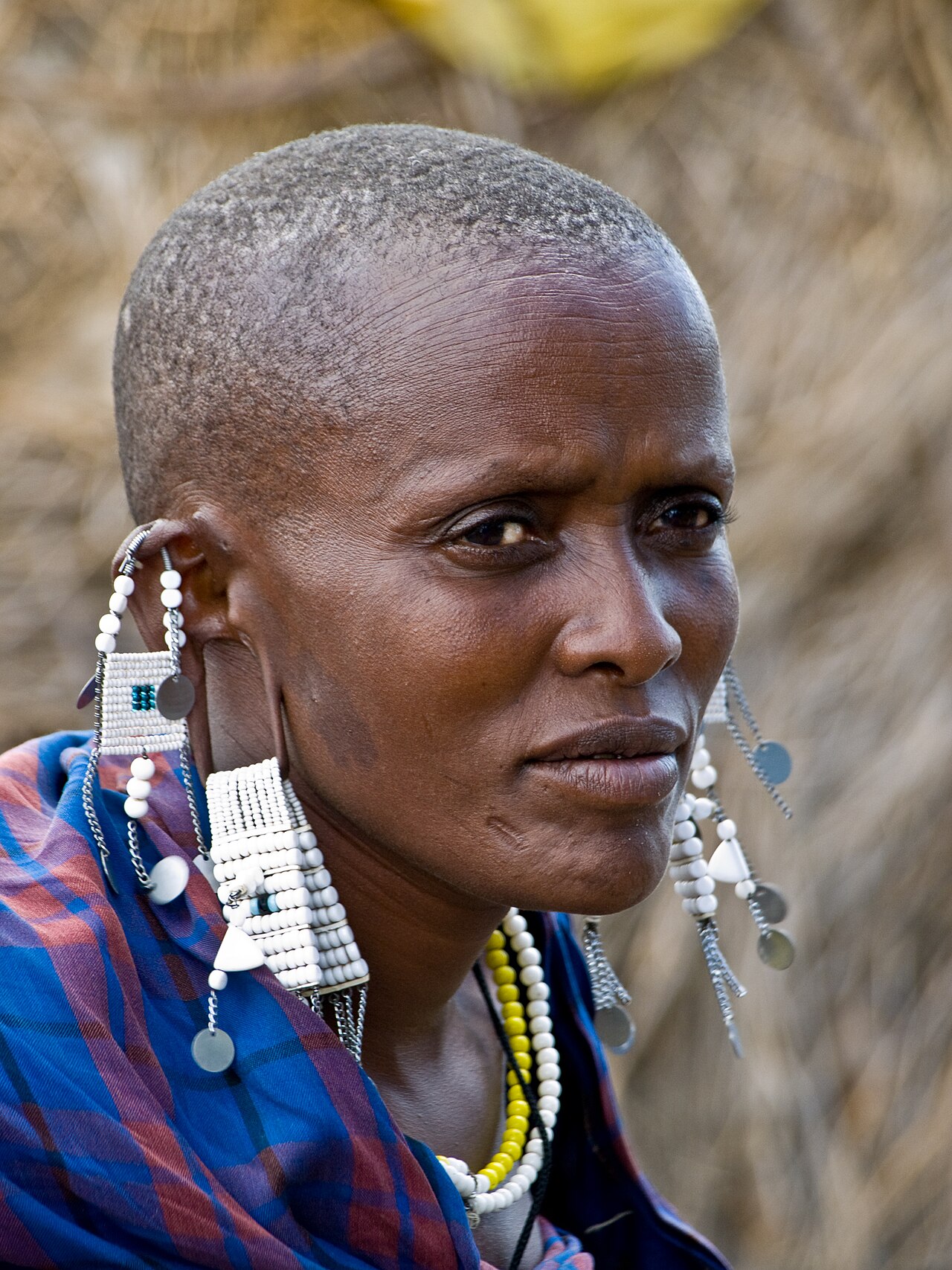
A Maasai woman in traditional dress.© William Warby · CC BY 2.0 Getting there: Drive Serengeti → Ngorongoro highlands
Travel to the Ngorongoro Conservation Area, home to the world's largest intact volcanic caldera. Arrive at the crater rim for the jaw-dropping first view down into this vast natural amphitheatre, a self-contained Eden where wildlife flourishes. This is also Maasai land — you may visit a village to learn about their proud, semi-nomadic way of life.
The first glimpse over the rim of the Ngorongoro Crater steals your breath — a 600-metre-deep bowl, 20 kilometres across, its floor scattered with herds and predators like a living diorama. It feels like a lost world.
Our take
If you visit a Maasai village, choose a respectful, fairly run community experience. The crater-rim lodges have staggering views — worth it for one night.
Highlights
- ✦ Ngorongoro Crater rim
- ✦ Maasai culture
- 6

The lakeshore of Lake Manyara National Park.© John Mackenzie Burke · CC BY-SA 4.0 
Sunset over the Serengeti savanna.© Vincent van Zeijst · CC BY 3.0 Getting there: Crater-floor game drive; option of Lake Manyara
Descend onto the floor of the Ngorongoro Crater for a magnificent game drive among an astonishing density of wildlife — this is one of the best places in Africa to see the Big Five, including the rare black rhino. Later, you may visit Lake Manyara National Park, known for its tree-climbing lions and shores tinged pink with flamingos, as your safari draws to a close.
On the crater floor, wildlife is everywhere you look — lions, elephants, buffalo, hippos and, if you're lucky, a black rhino in the distance — an almost unreal abundance packed into one extraordinary bowl. It's a fitting grand finale.
Our take
Get down to the crater floor early — it can get busy, and the morning light and activity are best. Black rhino sightings are special, so bring binoculars.
Highlights
- ✦ Big Five on the crater floor
- ✦ Lake Manyara
- 7

Heading home... already planning the next trip.© Tobias1984 · CC BY-SA 3.0 Getting there: Drive to Arusha / Kilimanjaro (JRO); fly home
Return to Arusha and Kilimanjaro Airport for your flight home, heads full of lions, elephants and endless plains. Want more? The 15-day route adds the spice island of Zanzibar — Stone Town, powder-white beaches and the warm Indian Ocean — to round out the safari with paradise.
A week on safari in Tanzania — the Serengeti, the migration, the Ngorongoro Crater — delivers wildlife encounters of a lifetime, and leaves you understanding why Africa gets so deeply under your skin.
Our take
Tip your guide generously — they make the safari. Many international flights leave Kilimanjaro late at night, so plan the last day accordingly.
Highlights
- ✦ Safari of a lifetime
- ✦ Fly home
Where to stay
The best neighbourhood to base yourself in each area, by budget. We point you to the right zone — then you pick and book the place that fits.
Arusha & Kilimanjaro
- Backpacker · Arusha / Moshi town
- Guesthouses and budget hotels in the safari and climbing gateway towns.
- Mid-range · Arusha outskirts / coffee lodges
- Comfortable lodges in gardens and coffee estates near town.
- Comfort · Boutique coffee-plantation lodges
- Upscale lodges with Kilimanjaro or Meru views.
Serengeti
- Backpacker · Public campsites
- Basic park campsites on a budget camping safari.
- Mid-range · Seronera (central) camps
- Comfortable tented camps and lodges in the wildlife-rich central area.
- Comfort · Migration mobile camps
- Luxury tented camps that move with the Great Migration.
Ngorongoro
- Backpacker · Simba campsite (crater rim)
- A basic campsite right on the crater rim, with epic views.
- Mid-range · Karatu / crater highlands
- Comfortable lodges in Karatu and the highland farms below the crater.
- Comfort · Crater-rim lodges
- Luxury lodges perched on the rim with views into the crater.
Zanzibar
- Backpacker · Stone Town / Paje
- Guesthouses in the old city or backpacker-friendly Paje on the east coast.
- Mid-range · Nungwi / Kendwa
- Comfortable beach hotels on the swimmable north coast.
- Comfort · East-coast & private-island resorts
- Luxury beach resorts and exclusive private-island retreats.
We may earn a commission from bookings made through these links, at no extra cost to you.
At a glance
Best time to go
Tanzania is good year-round, but the dry seasons are best for safari, when animals gather at water and the bush thins out: late June to October is prime, with the dramatic Mara River crossings of the Great Migration usually July–September, and January–February is great for the calving season and southern Serengeti. The "long rains" (March–May) are the wettest and quietest. For Kilimanjaro, climb in the dry windows (Jan–mid-March or June–October). Zanzibar is warm all year, best in the drier months.
Currency
TZS (Tanzanian shilling); USD widely used for tourism
Language
Swahili (Kiswahili) is the national language and a beautiful one to dip into — "jambo" (hello), "asante" (thank you), "hakuna matata" (no worries). English is the language of business, tourism and education, so you'll get by easily; your safari guides typically speak excellent English.
Visa & entry
Most visitors need a visa, which is easy to obtain — an eVisa online in advance is recommended, and many nationalities can also get a visa on arrival. A valid yellow fever certificate is required if you're arriving from (or transiting) a country with risk of yellow fever. Always confirm the current visa and health requirements for your nationality well before you travel.
Daily budget
A Tanzania safari is a bucket-list trip, and prices reflect it — park fees alone are high, and most safaris are all-inclusive with a guide and 4x4. Plan from roughly €200–400+ per person per day for a mid-range safari (lodges, guide, vehicle, park fees, meals); Zanzibar is far cheaper, and budget camping safaris cost less, while luxury lodges and a Kilimanjaro climb cost considerably more. Figures are approximate.
Getting around
Safaris are almost always organised through an operator, with a guide driving you between parks in a 4x4 — the distances are long and the roads rough, but the journeys are part of the adventure. Light aircraft connect the safari areas, Arusha, Kilimanjaro and Zanzibar, saving long drives. To reach Zanzibar, fly or take the ferry from Dar es Salaam. You won't self-drive on a typical first safari.
Safety
Tanzania is welcoming and the tourist routes are generally safe, but take sensible precautions: use reputable operators, watch your belongings in busy towns, and always follow your guide's instructions around wildlife — these are wild animals, not a zoo. Health matters more than crime here: malaria is present, so take antimalarials and use repellent; drink bottled or purified water; and protect yourself from the strong equatorial sun. Check vaccination advice before you go.
Connectivity
A local SIM (Vodacom, Airtel, Halotel) is cheap and gives decent coverage in towns and many lodges, but expect to be off-grid in the remote parks — which is part of the magic. Many lodges and camps have Wi-Fi at the main building. Carry a power bank, as electricity in camps can be limited to certain hours.
What to pack — Tanzania
Our recommended gear for this trip — country-specific picks first, then the travel essentials we never leave home without.
- 🔭Binoculars→
- 🧴Insect repellent (DEET)→
- 🧥Neutral layers for game drives→
- 🧢Sun hat & high-SPF sunscreen→
- 🔌Universal travel adapter→
- 🧳Packing cubes→
- 🔋Power bank→
- 🎒Packable daypack→
- 💧Filtered water bottle→
- ⛑️Travel first-aid kit→
Amazon affiliate links — we may earn a small commission at no extra cost to you.
Frequently asked questions
When is the best time for a Tanzania safari? +
The dry seasons are best for game viewing, when animals gather at water and the bush thins: late June to October is prime, with the Great Migration's Mara River crossings usually July–September. January–February is great for the calving season in the southern Serengeti. The "long rains" (March–May) are wettest and quietest but lush and cheaper. Zanzibar is warm year-round, best in the drier months.
Do I need a visa and vaccinations? +
Most visitors need a visa — an eVisa in advance is recommended, with visa on arrival also available for many nationalities. A yellow fever certificate is required if arriving from or transiting a risk country. Malaria is present, so antimalarials and repellent are strongly advised, and other vaccinations may be recommended — see a travel clinic well before you go. Always confirm the current rules.
How much does a Tanzania safari cost? +
Safaris are a premium experience — park fees alone are high, and trips are usually all-inclusive with a guide and 4x4. Budget from roughly €200–400+ per person per day for a mid-range safari; budget camping costs less and luxury lodges far more. Zanzibar is much more affordable. A Kilimanjaro climb is a separate, significant cost.
Can I combine a safari with Zanzibar or Kilimanjaro? +
Absolutely — it's the classic Tanzania trip. A northern-circuit safari pairs perfectly with a few days unwinding on Zanzibar's beaches (a short flight away). The ultimate adventure adds a Kilimanjaro climb (a demanding 6–8 day trek) before the safari and the sea — exactly what the 21-day route is built around.
Sources
Last reviewed on June 12, 2026Facts in this guide were checked against the following sources.
- Tanzania Tourist Board — Destinations and travel basics
- Tanzania National Parks (TANAPA) — National parks & fees
- Tanzania eVisa — Immigration — Visa applications
- Ngorongoro Conservation Area Authority — Ngorongoro Crater & Olduvai
⚠️ Prices, opening hours and transport times change — always verify the latest details before you travel.
Keep exploring
More day-by-day itineraries to inspire your next trip.

Egypt
The Pyramids, a Nile cruise, the temples of Luxor and Abu Simbel, and the Red Sea.

Morocco
Marrakech and Fez, the High Atlas, Sahara dunes and the blue city of Chefchaouen.

South Africa
Cape Town and Table Mountain, the Garden Route, a Big Five safari and the Winelands.

Japan
Neon cities, ancient temples and bullet trains — the perfect first trip to Asia.

Italy
Ancient ruins, Renaissance art, impossible coastlines and the best food on earth.

Thailand
Golden temples, jungle and elephants, street food and impossibly blue islands.